Author: Arturs Silins

  • Podcast: Security by Design

    Podcast: Security by Design

    I worked on an episode of the Howest Student IT podcast, together with fellow student Angadbir Singh. Security by Design the idea that security shouldn’t be bolted on at the end, but built into software from day one. For this, we interviewed a developer from Syba, the company where I did my internship.

    The conversation went over a number of topics for example – how a working developer stays up to date in a field that moves this fast, what it’s like working with interns from Belgium and abroad, managing context switching and shifting priorities in a startup, debugging and communication when something breaks, and how AI is reshaping development workflows. The thread tying it together was security specifically how early in the process it comes into play, and how you build with that in mind from start rather than treating it as an afterthought.

    Why this topic

    As a cybersecurity student, “security by design” is something I keep running into from the defensive side but I wanted to hear how an actual senior developer experiences it day to day, where the trade-offs are, and how it competes with the pressure to give results quickly in a startup. Talking to someone with actual experience gave great insights.

    What I took from it

    Two things stayed with me. First, staying current isn’t a side activity for a good developer it’s part of the job, through work, side projects and community alike. Second, security being “built in from day one” is easy to say and harder to realise, it’s as much about habits and communication as it is about tools. Preparing the questions and steering a real conversation also taught me something about interviewing and communicating clearly.
    Listen to the episode

  • Tech & Meet: A Day in the Life of Blue & Purple Team Engineers

    Tech & Meet: A Day in the Life of Blue & Purple Team Engineers

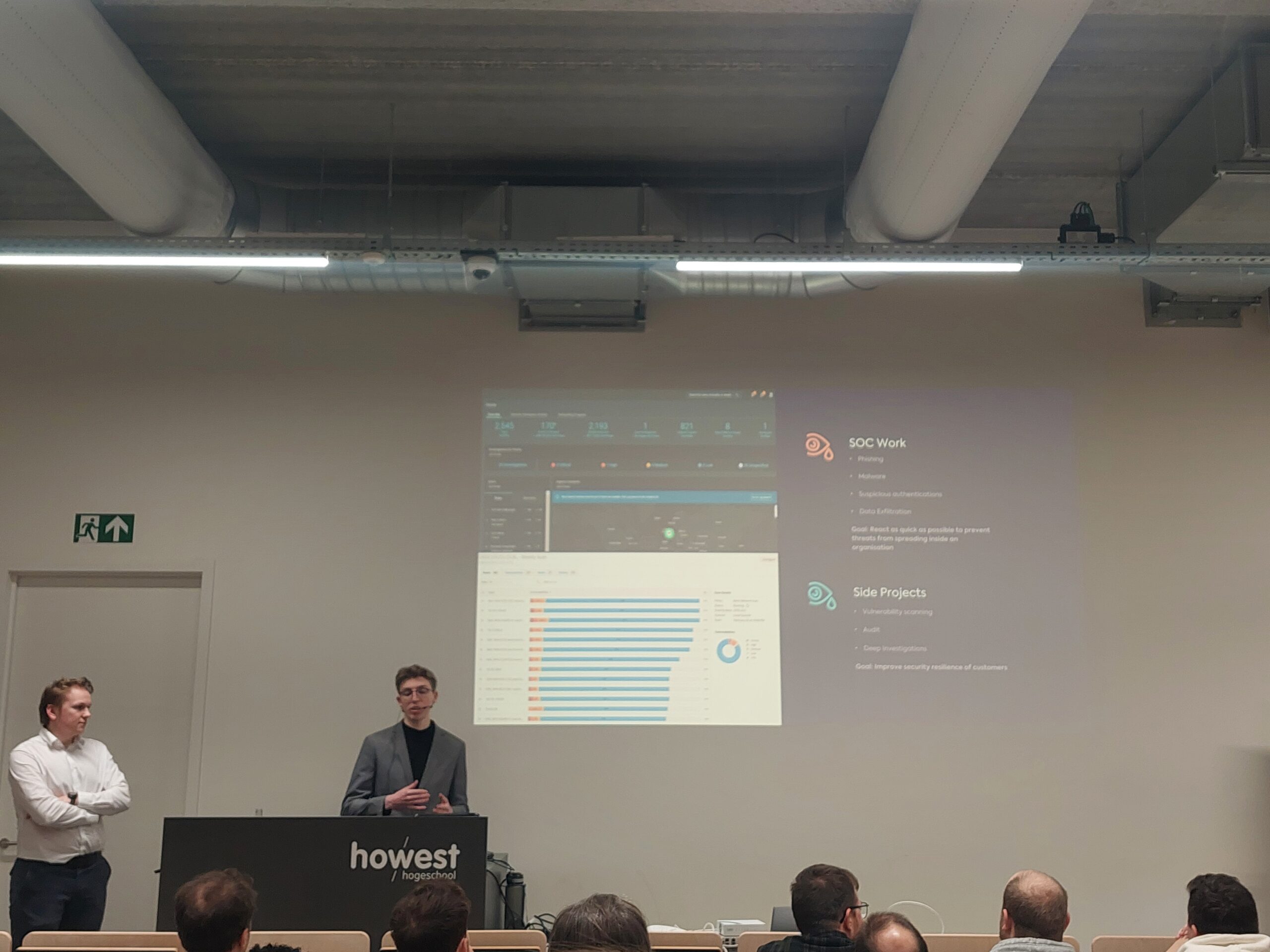
    This was easily one of the most practical sessions I’ve attended. Raf Coulier, a SOC Analyst at EASI, and Thijs Bryon, a Network Security Engineer at EASI, took us behind the scenes of real cyber defence work including a live demo of how an attack actually unfolds. They split the evening between the Purple/SOC side and the Blue/network side, which made the different roles concrete.

    The SOC / Purple side

    Raf walked through the daily reality of a SOC analyst – triaging phishing, malware, data exfiltration and suspicious authentication, alongside side work like audits, vulnerability scanning and deeper investigations. He went through the tooling that makes this possible: Darktrace for network detection and response, where AI flags anomalies in traffic, Rapid7 as a SIEM to centralise log sources, SentinelOne for endpoint detection and response across all assets and an XDR layer to identify and follow up on threats inside the organisation.

    The highlight was a hands on demo of how a victim actually gets compromised. The example was a phishing email disguised as a Teams meeting link that led to a malicious page, which prompted the user to “update their audio drivers” by pasting obfuscated malicious code into a shell a very likely social engineering chain. We then saw it from the defender’s side, in a monitoring system showing details about the executed payload.

    The Blue / network side

    Thijs covered the infrastructure that keeps an organisation secure. Fortinet firewalls and the Forti fabric for logging and management, Cato Networks providing cloud-based SASE firewalling, and Aruba’s network access control automatically assigning rights and segmenting devices. Tying it together, all logs feed into a solution like Rapid7 so the SOC can actually act on them, with CrowdStrike handling endpoint protection.

    What I took away most was the mindset of continuous learning as part of the job. They talked about keeping up with cyber news and running home labs with tools like Proxmox and VPNs to stay sharp. That’s exactly the kind of lifelong learning attitude cybersecurity is all about, and it was motivating to see it modelled by people doing the work. Easily one of the most useful sessions I’ve attended, and one I’d recommend to anyone curious about what defensive cyber work actually looks like day to day.

  • Tech & Meet: Protecting Belgium — Active Cyber Protection

    Tech & Meet: Protecting Belgium — Active Cyber Protection

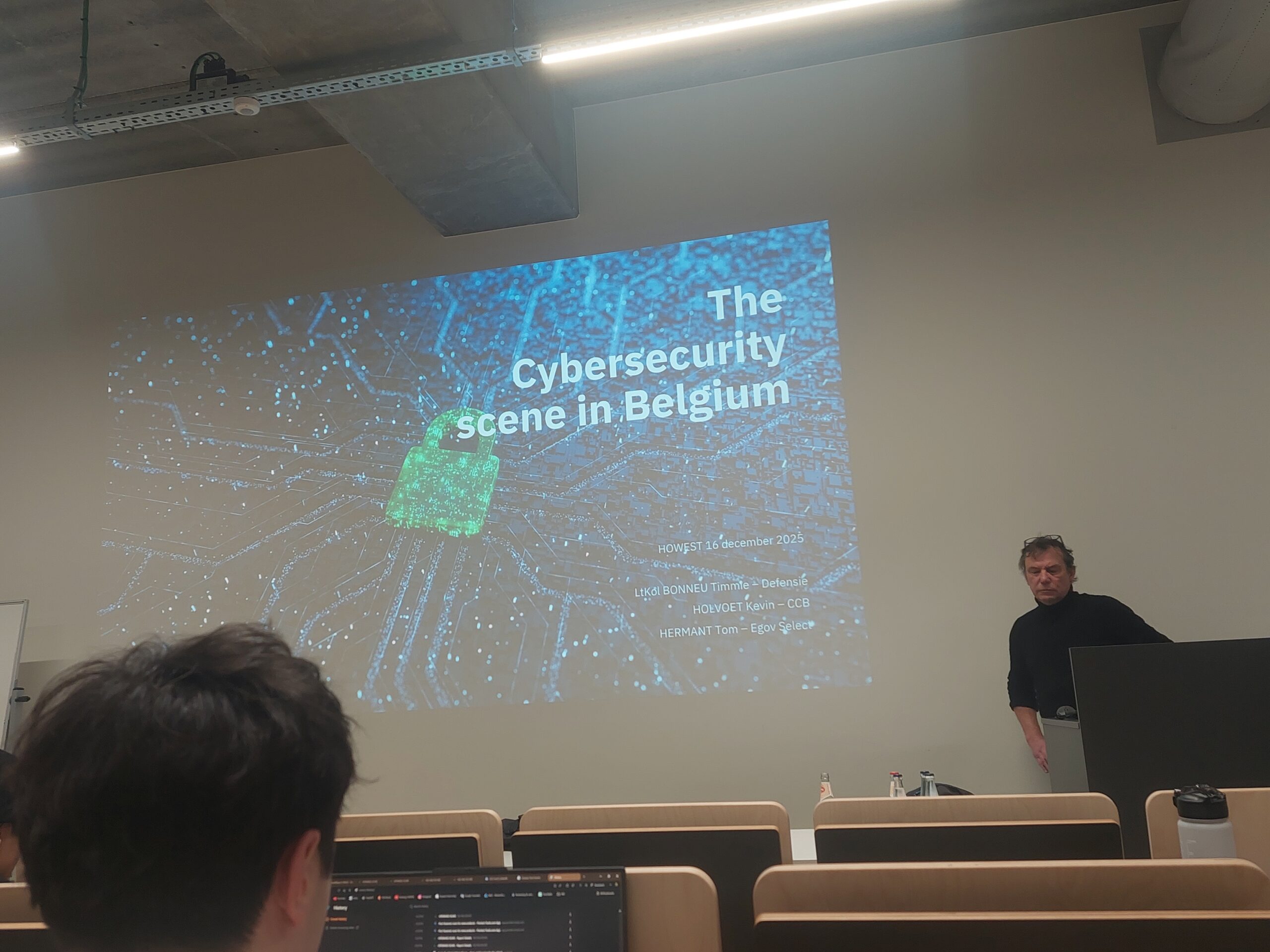
    This Tech & Meet session was a clear, practical overview of Belgium’s cybersecurity landscape, the kind of session that’s less about a single technology and more about understanding the field I might work in. It featured three speakers: Tom Hermant, a specialist IT recruiter at EgovSelect; Sandro Manzo, Lead of the Fusion Centre at the Centre for Cybersecurity Belgium (CCB); and Timmie Bonneu, a cybersecurity specialist with the Belgian Cyber Force / CyberCommand.

    One of the most useful parts was simply being helped to “see the forest for the trees” with the tangle of Belgian acronyms – CCB, CDF, CERT, FCCU, NCCN, SGRS, VSSE and more. Before this I had only a basic idea of who does what, afterwards I had a much clearer understanding, their missions, and where they sit in the national security picture.

    Careers and the bigger picture

    The speakers talked about how cybercrime is rising fast, accelerated by AI, and how Belgium’s defensive efforts and the job opportunities that come with them are growing in response. The CCB and Cyber Force speakers described their roles in protection, the skills they look for, and the career paths available. EgovSelect, the recruiting partner for both CCB and CyberCommand, walked through how recruitment actually works and the full application procedure.

    A point that stuck with me is that cybersecurity isn’t only for pure technical experts, the field also needs analysts, policy specialists, researchers, forensics people and threat hunters. As someone heading toward graduation, hearing concretely how to apply for these roles and what they look at, straight from the recruiters and the people already doing the job, was genuinely valuable. This presentation gives a wider look into career interest and what would the next steps be. I’d recommend it to any student weighing up a career in cyber it turns a vague interest into concrete options.

  • Tech & Meet: DeepSeek Uncovered

    Tech & Meet: DeepSeek Uncovered

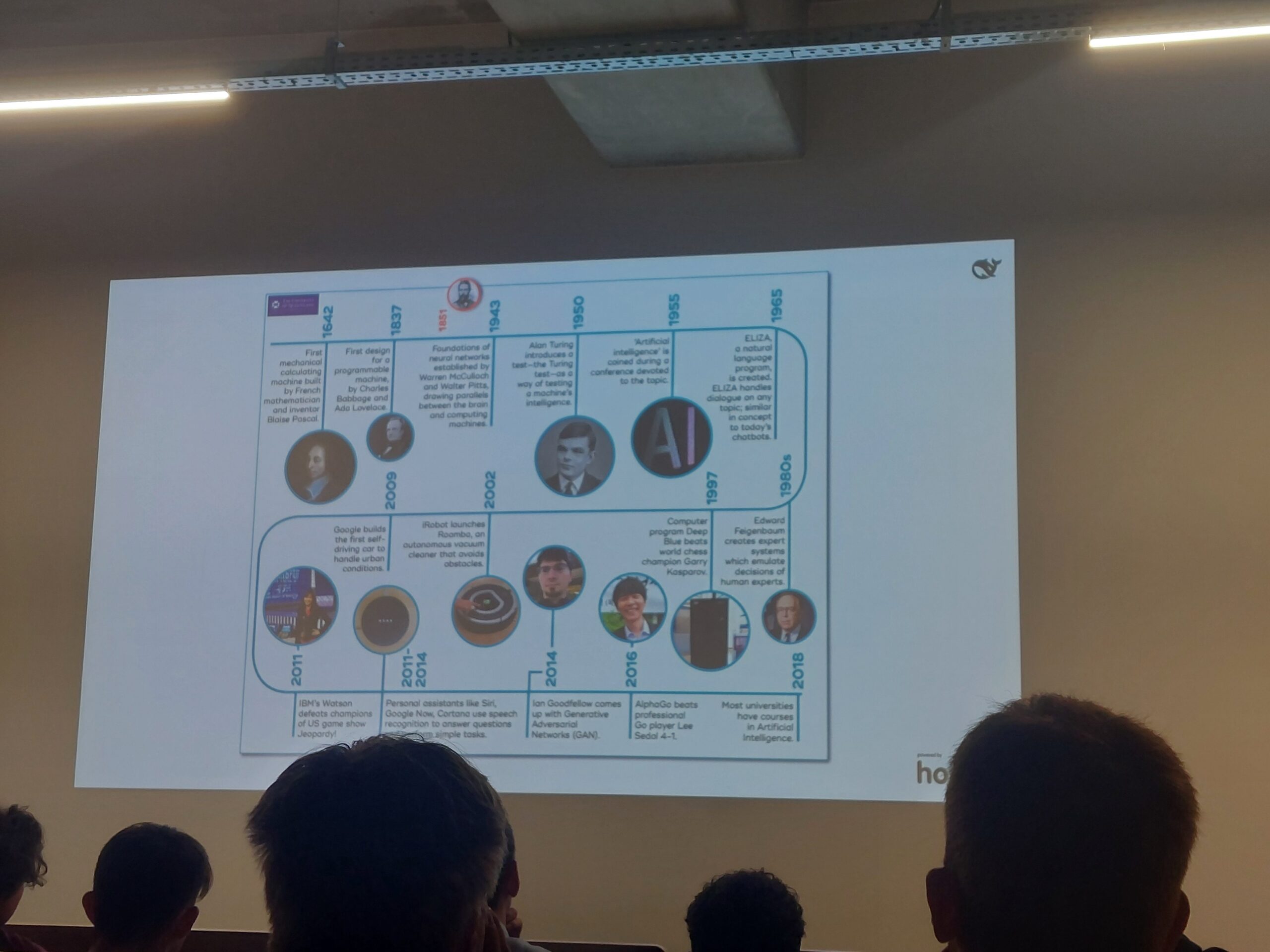
    This Tech & Meet session, presented by Dimitri Casier (lecturer in Software Development and AI at Howest), looked at DeepSeek, one of the most talked about open-source AI models of 2025, developed in China and positioned as an alternative to models like GPT-4 and Claude.

    The presentation was about what DeepSeek actually is and how it stacks up against the leading models, with live demos of its reasoning, code generation and multimodal capabilities. What I found most interesting wasn’t the benchmarks but the bigger questions around it: the ethics and transparency of open-source AI, and the geopolitical implications of a capable model coming out of China and being made openly accessible. It’s a genuinely different proposition from a closed commercial model, and that openness cuts both ways, it’s good for transparency and research, but it also lowers the barrier for misuse.

    My takeaway

    Coming from a cybersecurity angle, the part that stayed with me was the security and trust dimension of open models: who audits them, what data they were trained on, and how you reason about risk when a powerful model is freely available to everyone, including people with bad intentions. The session left me thinking that the interesting question about a tool like DeepSeek isn’t just “is it as good as the others,” but “what changes when capability like this is open by default.” It was a useful, accessible overview of a fast-moving topic, and a good reminder to keep updated on tech innovations. A solid, accessible introduction worth attending if you want a quick, critical overview of where open AI is heading, even if it stays fairly high-level.

  • Tech & Meet: The Birth of NATO’s Cyber Defence

    Tech & Meet: The Birth of NATO’s Cyber Defence

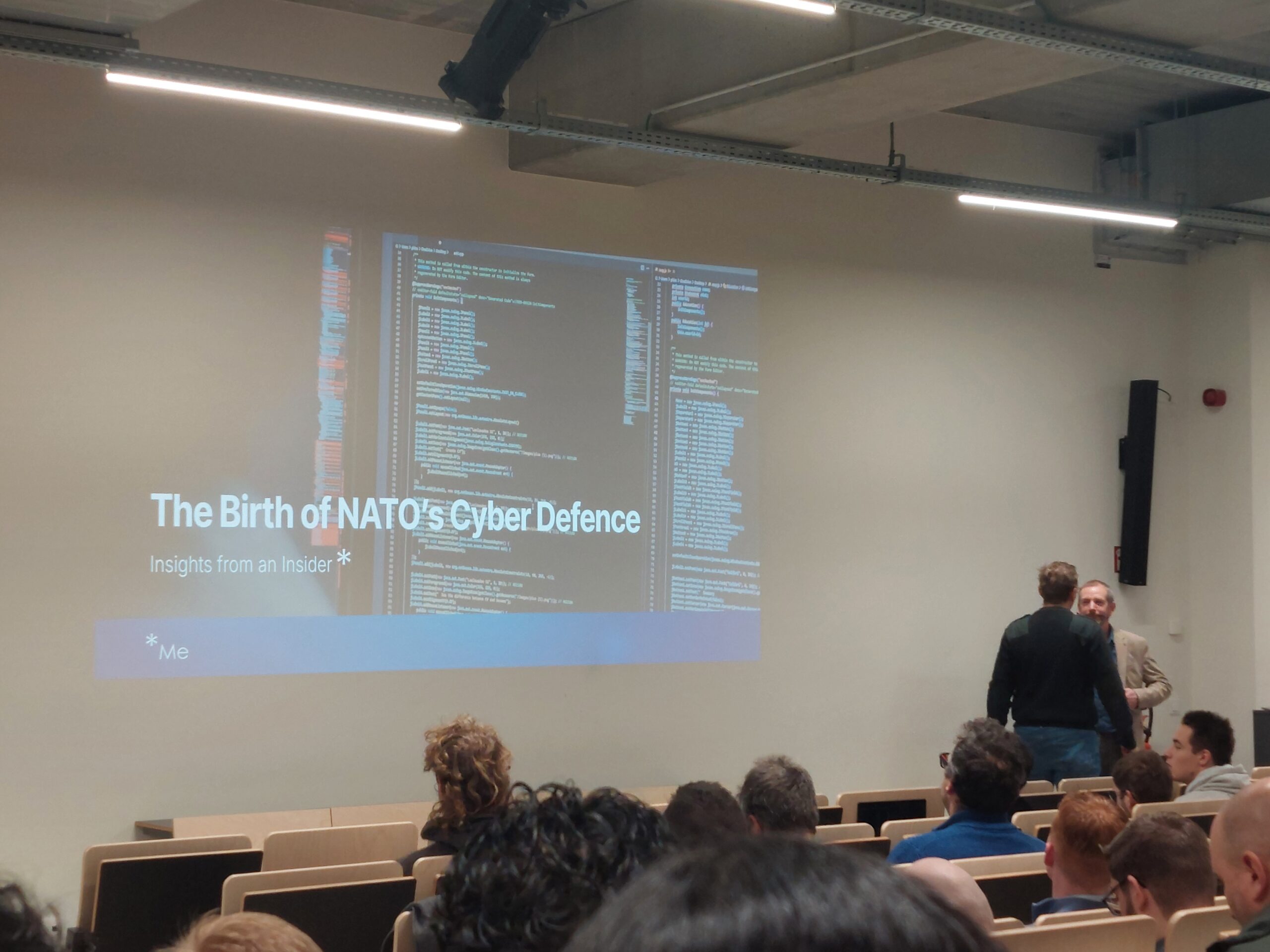
    On 2nd December I attended a Tech & Meet session titled “The Birth of NATO’s Cyber Defence: Insights from an Insider,” presented by Martin De Pauw. His background made him a rare speaker to hear from: he graduated from the Royal Military Academy, started his career in F-16 avionics, moved into software, hardware and networks, and was eventually given responsibility for helping co-create cyberspace within the NATO context. He still works at NATO Headquarters in IT and cyber today.

    He framed the talk around a shift I’ve heard echoed elsewhere but rarely from someone so close to it: cyber used to be seen as a niche for “nerds and techies,” and is now everyone’s reality. He walked us back to 2016, the year NATO officially recognised cyberspace as a domain of operations alongside land, sea and air, and traced the Alliance’s path from digital uncertainty toward genuine cyber resilience across its 32 nations.

    What stuck with me

    A big theme was regulation, which is easy to overlook when you’re focused on the technical side. He stressed how important frameworks like NIS2 and the Cyber Resilience Act have become, and why compliance is now part of the security picture rather than separate from it. That connects directly to the GDPR and compliance work I’ve done in my own coursework.

    The other thread was the rise of AI in offensive operations including attacks that misuse capable AI models, and the reality that powerful tools get exploited and turned against the systems they were meant to help. His point that “everything is now a computer” landed well: a modern aircraft, as he put it, is essentially a flying computer, and that means everything needs to be tested as if you were the attacker. As a cybersecurity student that attacker’s-mindset framing is something I want to carry into my own work.

    It was a genuinely inspiring evening that tied technology, strategy and global security together, and hearing it from someone who was actually in the room for NATO’s early cyber decisions made it memorable. I’d recommend it to anyone curious about cybersecurity on a national scale.

  • Hack The Future – Hackathon 2025

    Hack The Future – Hackathon 2025

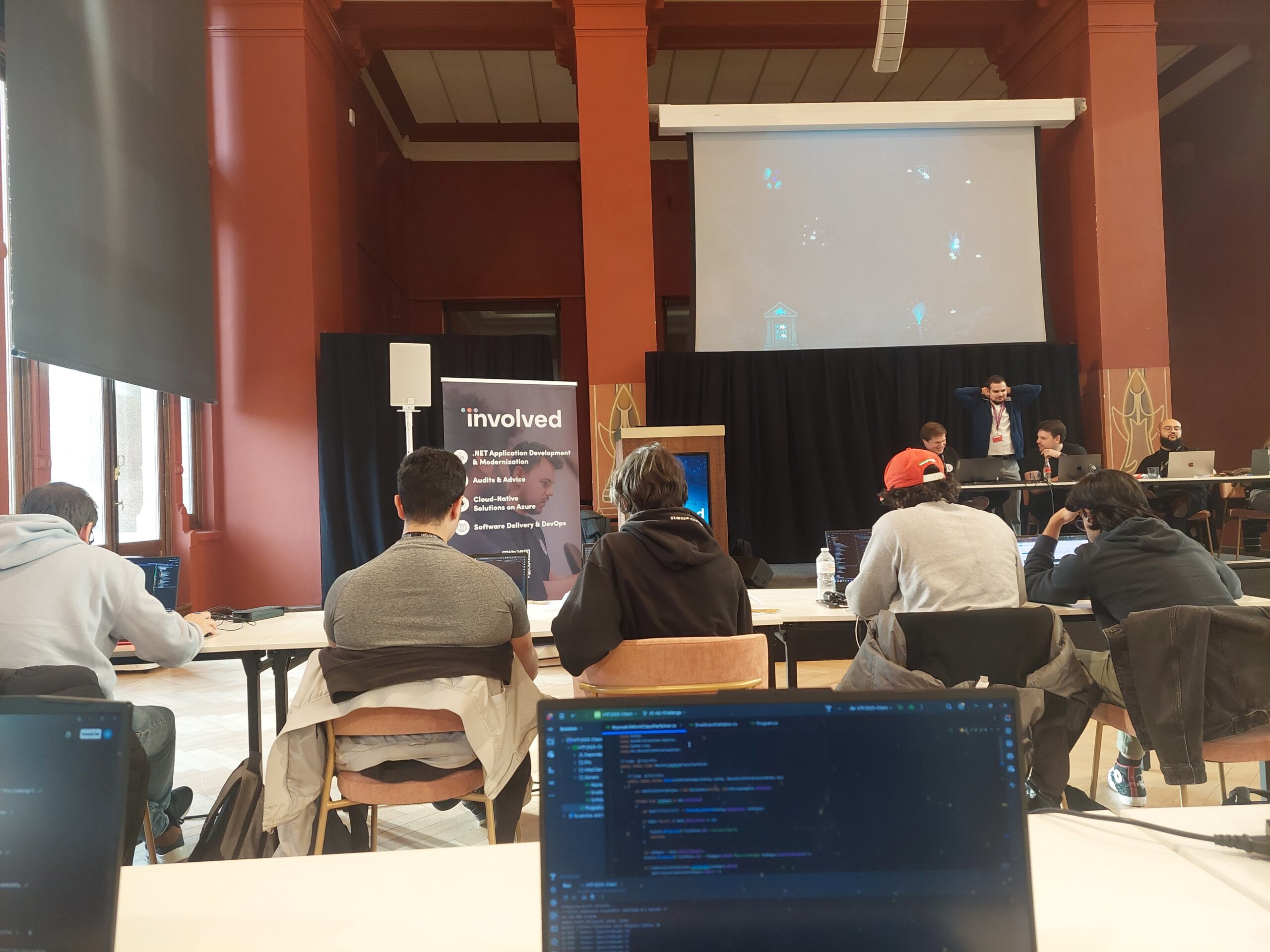
    On 12th November 2025 I took part in Hack The Future, a one-day hackathon where teams work through a themed set of programming challenges. My team tackled Challenge 108, “Expedition Abyss: Digitize your way through the deep ocean” – a series of .NET and C# problems framed as a deep-sea expedition.

    The challenges

    The work was very mathematical. One challenge had us build a DNA strand validator which was checking sequences against a set of rules, then computing a weighted value where consecutive building blocks multiply. Others centered on decoding data – taking encrypted binary bytes, decrypting them with an XOR key, and translating the result into terrain types like water, rock, thermal vents and anomalies, then navigating a grid to reconstruct the seabed. The final route asked for a classification function that matched lifeforms to categories using weighted features and a prime numbers based score. It was a good reminder that a lot of security and data work comes down to clean parsing, solving challenging issues, and understanding mathematics.

    An unexpected extra challenge

    There was a twist I hadn’t planned for, the challenge and all its presentations were in Dutch. Company organising the challenge hadn’t expected there to be someone that doesn’t speak the language. As an international student that meant my teammate and I had to translate every task and slide before we could even start solving it. We were the only English speaking team there, which slowed us down noticeably. To their great credit, the team running the challenge were extremely accommodating as they came over and explained everything to us individually in English whenever we needed it, which made a real difference.

    Reflection

    In the end we completed about half of the challenges and didn’t place for any prizes. Given the extra hurdle of translating everything as we went, I don’t think that’s a bad result at all and the problems themselves were a great, very mathematical learning exercise. More than the code, the day taught me something about working under constraints I couldn’t control and pushing through them anyway. I’d happily do it again, and next time I’ll know to anticipate for the unexpected.

  • Building this website

    Building this website

    As part of my university work and to have a place to showcase my portfolio alongside my CV, I built an e-portfolio in the form of a blog. It’s a place to write about my projects and the events I attend throughout the year, and to give people a sense of who I am and what I’m interested in.

    The platform

    I chose WordPress, and the reason was simple: I’d already used it for two different projects during my studies. By now I’m comfortable with the admin panel and how everything fits together, and I’ve found it reliable and straightforward to work with. Rather than learning a new tool just for the sake of it, I went with something I knew I could publish on quickly and maintain easily in the future. For a portfolio that needs to keep growing, that reliability and simplicity matters more than novelty.

    Domain and hosting

    I registered silinsarturs.be and set up hosting through Combell, obtained via Howest’s academic software programme, which covers the cost while I’m a student. WordPress runs on top of that. Getting the domain, hosting, and a first version of the site online took roughly an afternoon.

    Design

    I started from one of WordPress’s clean default themes and customised it rather than reaching for a heavy template. The landing page is a single scrolling layout — About, Experience, Education, and Contact — with a separate blog for project write-ups and event reflections. I kept the styling minimal on purpose: one accent colour, simple typography, and plenty of whitespace, so the focus stays on the content.

    Effort per post

    Adding a new post takes only a few minutes. I write the text, set a featured image and a short excerpt so it looks right in the blog overview, assign a category to keep things organised, and publish. Keeping it simple to add a post means I can stay up to date easily, and write a reflection right after an event while it’s still fresh in my mind.